
The human body is an amazing biological system in which different organs work together to maintain life. However, have you ever wondered whether humans can survive without certain organs?
The answer is yes, humans can live without several organs, although their removal may cause changes in digestion, hormone production, immunity, or other bodily functions.
Some organs can be removed with relatively few long-term effects, while others require lifelong medication, nutritional support, or regular medical monitoring. In many cases, the remaining organs adapt and compensate for some of the lost functions.
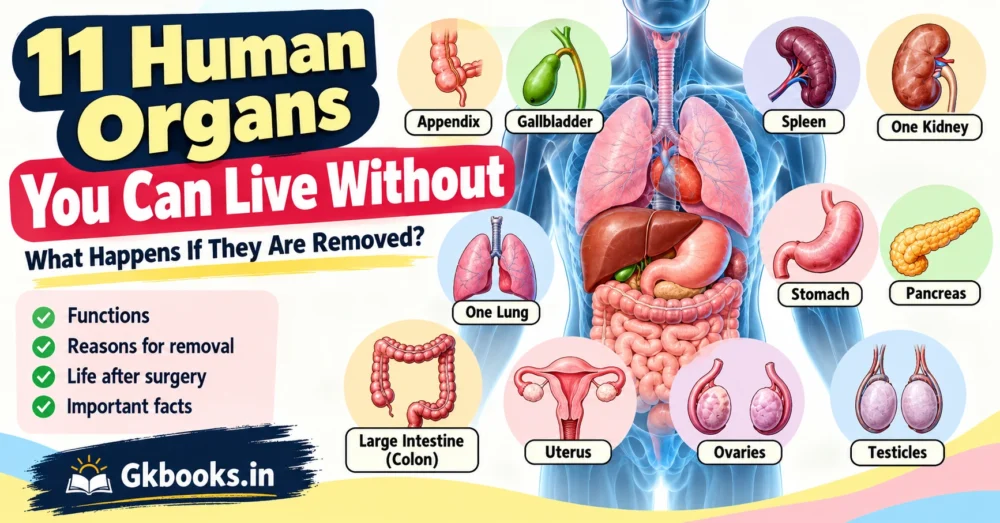
In this article, we will explore 11 human organs you can live without, explain why they may be removed, and discuss what happens to the body afterward.
1. Appendix
The appendix is a small, finger-shaped pouch attached to the large intestine. Although it may play a role in immune function and the gut microbiome, it is not essential for survival.
- Can you live without it? Yes.
- Surgical removal: Appendectomy.
- Why is it removed? Most commonly, because of appendicitis.
Appendicitis occurs when the appendix becomes inflamed, sometimes leading to a serious infection if left untreated. An appendectomy removes the affected appendix.
Most people recover and return to their normal activities without significant long-term digestive problems.
Interesting fact: The appendix is not entirely useless, but humans can survive and live healthy lives without it.
2. Gallbladder
The gallbladder is a small, pear-shaped organ located beneath the liver. Its primary function is to store and concentrate bile, which helps the body digest fats.
- Can you live without it? Yes.
- Surgical removal: Cholecystectomy.
- Why is it removed? Common reasons include gallstones, inflammation, and related complications.
After gallbladder removal, the liver continues to produce bile. Instead of being stored in the gallbladder, bile flows directly into the small intestine.
Most people can eat a normal diet after recovery. However, some experience temporary diarrhea, bloating, or difficulty tolerating large, high-fat meals.
Key point: The gallbladder stores bile, but the liver produces it. This is why the body can function without the gallbladder.
What is the composition of Bile?
3. Spleen
The spleen is located in the upper-left part of the abdomen. It filters blood, helps remove old or damaged blood cells, and supports the immune system.
- Can you live without it? Yes.
- Surgical removal: Splenectomy.
- Why is it removed? Possible reasons include severe injury, certain blood disorders, or other medical conditions.
After the spleen is removed, the liver and other tissues take over some of its functions. Nevertheless, the risk of certain severe infections increases, sometimes for life.
People without a spleen may need specific vaccinations, preventive antibiotics in selected circumstances, and prompt medical attention if they develop a fever.
Important: Living without a spleen is possible, but infection prevention becomes especially important.
4. One Kidney
Most healthy people are born with two kidneys. These organs filter waste from the blood, regulate fluid and electrolyte balance, help control blood pressure, and support red blood cell production.
- Can you live with one kidney? Yes.
- Surgical removal: Nephrectomy.
- Why might one kidney be removed? Kidney donation, serious injury, certain tumors, or other kidney conditions.
A healthy remaining kidney can increase its workload and compensate for much of the lost kidney function.
Many people with one healthy kidney lead active, normal lives. However, maintaining good blood pressure, staying appropriately hydrated, and attending recommended medical checkups are important.
Did you know? A person can donate one healthy kidney and continue living with the remaining kidney, provided they meet medical requirements.
Learn more about the composition of blood and the functions of its different components.
5. One Lung
The lungs are responsible for exchanging oxygen and carbon dioxide between the air and the blood.
Although humans normally have two lungs, it is possible to survive with only one functioning lung.
- Can you live with one lung? Yes.
- Surgical removal of an entire lung: Pneumonectomy.
- Why might a lung be removed? Certain lung cancers, severe lung damage, or other serious conditions.
After a pneumonectomy, the remaining lung supports breathing and oxygen exchange. However, total lung capacity and exercise tolerance may be reduced.
The degree of limitation depends on the person’s overall health, the condition of the remaining lung, and the reason for surgery.
Pneumonectomy is a major operation performed only when medically indicated.
6. Stomach
The stomach stores food temporarily and mixes it with digestive juices before passing it into the small intestine.
In certain circumstances, surgeons may remove part or all of the stomach.
- Can you live without a stomach? Yes, with major changes and appropriate medical care.
- Surgical removal of the entire stomach: Total gastrectomy.
- Why is it removed? Common reasons include stomach cancer and certain other serious diseases.
After total gastrectomy, the esophagus is surgically connected to the small intestine so that food can pass through the digestive system.
Digestion continues, but the body processes meals differently. People generally need to eat smaller, more frequent meals and may require nutritional supplements.
Vitamin B12 replacement is particularly important after total gastrectomy. Iron, calcium, vitamin D, and other nutrients may also require monitoring.
Key point: A stomach is not absolutely necessary for survival, but living without one requires substantial dietary adjustments and long-term follow-up.
7. Pancreas
The pancreas is an important organ with two major functions: producing digestive enzymes and releasing hormones, including insulin, that help regulate blood glucose.
- Can you live without a pancreas? Yes, with lifelong treatment.
- Surgical removal: Total pancreatectomy.
- Why might it be removed? Certain pancreatic cancers and other serious pancreatic diseases.
After complete removal, the body can no longer produce pancreatic insulin or digestive enzymes normally.
As a result, patients generally require:
- Lifelong insulin therapy to control blood glucose.
- Pancreatic enzyme replacement with meals and snacks.
- Regular monitoring of blood glucose and nutritional status.
- Ongoing medical care to prevent and manage complications.
Without proper treatment, severe blood glucose disturbances and malnutrition can develop.
Important: Although survival without a pancreas is possible, it requires careful, lifelong medical management.
8. Large Intestine (Colon)
The large intestine absorbs water and electrolytes from intestinal contents and helps form and store stool.
In some cases, part or all of the colon must be removed.
- Can you live without the colon? Yes.
- Surgical removal: Colectomy.
- Why might it be removed? Severe inflammatory bowel disease, colorectal cancer, certain inherited conditions, or serious intestinal complications.
The small intestine can absorb most nutrients without the colon. However, the body may lose more water and electrolytes through stool, especially after extensive removal.
Depending on the operation, the surgeon may reconnect the remaining intestine or create an ileostomy, an opening through which intestinal waste passes into an external pouch.
Some people experience frequent or loose stools, changes in bowel habits, or dehydration risk.
Key point: Living without the colon is possible, but bowel function and hydration may change significantly.
9. Uterus
The uterus is a reproductive organ in which a fetus develops during pregnancy. It also plays a role in menstruation.
- Can you live without the uterus? Yes.
- Surgical removal: Hysterectomy.
- Why might it be removed? Uterine fibroids, certain cancers, severe bleeding, or other medical conditions.
After a hysterectomy, pregnancy is no longer possible because the uterus is absent. Menstruation also stops.
If the ovaries remain, they can continue producing reproductive hormones. Therefore, removing the uterus alone does not necessarily cause immediate menopause.
If both ovaries are also removed before natural menopause, hormone levels fall sharply, resulting in surgical menopause.
Important distinction: Hysterectomy removes the uterus; it does not automatically mean that the ovaries are removed.
10. Ovaries
The ovaries are female reproductive organs that produce eggs and hormones, including estrogen and progesterone.
- Can you live without the ovaries? Yes.
- Surgical removal: Oophorectomy.
- Why might they be removed? Certain cancers, ovarian disorders, or elevated cancer risk in selected patients.
Removing one ovary does not necessarily prevent pregnancy or normal hormone production if the other ovary functions well.
However, removing both ovaries before natural menopause causes a significant reduction in ovarian hormone production. This can lead to hot flashes, sleep disturbances, vaginal dryness, changes in sexual function, and increased long-term risks to bone health.
Depending on age, medical history, and contraindications, hormone therapy may be considered.
Key point: Humans can live without ovaries, but the effects on fertility and hormone production can be substantial.
11. Testicles
The testicles, also called testes, are male reproductive organs responsible for producing sperm and testosterone.
- Can you live without the testicles? Yes.
- Surgical removal: Orchiectomy.
- Why might they be removed? Testicular cancer, certain prostate cancer treatments, severe injury, or other medical indications.
If one testicle is removed, the remaining healthy testicle can often produce sufficient testosterone and sperm for normal function and fertility.
If both testicles are removed, natural sperm production stops and testosterone levels fall substantially. This may affect sexual function, muscle mass, mood, bone health, and other bodily functions.
Testosterone replacement may be appropriate for some patients, depending on their medical circumstances.
Important: Removal of both testicles causes infertility unless sperm was preserved beforehand, and hormone management may be needed.
What About the Liver? Can Humans Live Without It?
The liver is one of the most important organs in the human body. It processes nutrients, produces essential proteins, helps regulate metabolism, and breaks down many drugs and toxins.
A person cannot survive indefinitely without adequate liver function. Complete and irreversible liver failure is life-threatening.
However, the liver has a remarkable ability to regenerate functional tissue after some of its mass is removed. This allows surgeons to remove part of the liver in carefully selected patients when medically appropriate.
If the liver fails completely and cannot recover, a liver transplant may be necessary.
This distinction is crucial: humans can survive after removal of part of the liver, but they cannot live indefinitely without sufficient functioning liver tissue.
The liver is one of the most important organs in the human body. It performs several essential functions, including detoxification, metabolism, and the production of bile. To learn more, read our detailed notes on liver anatomy, functions and diseases.
Summary: Which Organs Can Humans Live Without?
The following table summarizes the organs discussed in this article.
| Organ | Can a person survive without it? | Important consideration |
|---|---|---|
| Appendix | Yes | Usually little long-term impact |
| Gallbladder | Yes | Bile flows directly into the intestine |
| Spleen | Yes | Increased risk of severe infections |
| One kidney | Yes | Regular kidney and blood pressure monitoring |
| One lung | Yes | Reduced breathing reserve may occur |
| Stomach | Yes | Dietary changes and nutritional monitoring |
| Pancreas | Yes, with treatment | Insulin and enzyme replacement are generally required |
| Large intestine | Yes | Bowel changes and dehydration risk |
| Uterus | Yes | Pregnancy is no longer possible |
| Ovaries | Yes | Hormonal and fertility effects depend on whether one or both are removed |
| Testicles | Yes | Hormonal and fertility effects depend on whether one or both are removed |
Why Can Humans Survive Without Some Organs?
There are several biological reasons why the human body can function after certain organs are removed.
1. Other organs compensate
Some organs can increase their workload when another organ is removed. For example, one healthy kidney can often provide sufficient kidney function for the body.
2. Some organs perform functions that are not essential for immediate survival
The appendix and gallbladder have useful biological functions, but their removal does not eliminate a function that the body absolutely needs to survive.
3. Medical treatments can replace lost functions
Modern medicine can compensate for some missing organ functions. For example, insulin and pancreatic enzymes can replace important functions lost after a total pancreatectomy.
4. The body can adapt over time
Following certain operations, the digestive system, metabolism, and other physiological processes can adapt. The extent of adaptation varies according to the organ removed and the individual’s health.
Frequently Asked Questions (FAQs)
1. What is the most unnecessary organ in the human body?
There is no single organ that should universally be considered unnecessary. Some organs, such as the appendix and gallbladder, can be removed without preventing survival, but they still have biological functions.
2. Can a person live a normal life without an appendix?
Yes. Most people can return to their usual activities after recovering from an appendectomy, without significant long-term health problems related to the missing appendix.
3. Can a person live a normal life with one kidney?
Yes. Many people with one healthy kidney live active lives. However, they should follow medical advice and receive appropriate monitoring of kidney function and blood pressure.
4. Can you live without a gallbladder?
Yes. The liver continues producing bile after gallbladder removal. Some people experience digestive symptoms, especially after eating fatty meals, but many return to a normal diet.
5. Can humans live without a stomach?
Yes. People can survive after total gastrectomy, but they generally need smaller meals, nutritional monitoring, and vitamin supplementation when indicated.
6. Can humans live without a pancreas?
Yes, but complete removal requires lifelong medical management, including insulin therapy and pancreatic enzyme replacement.
7. Can a person live without a spleen?
Yes. However, the risk of certain serious infections increases. Vaccinations, preventive measures when indicated, and prompt evaluation of fever are important.
8. Can humans survive without a liver?
Not indefinitely without adequate liver function. Partial liver removal is possible because the remaining liver can regenerate, and liver transplantation can replace a failing organ.
9. Which organ can a person donate and still live?
A healthy person may be able to donate one kidney or part of the liver, subject to strict medical evaluation and eligibility requirements. Living donation involves risks and is not suitable for everyone.
10. Does living without an organ mean that the organ is useless?
No. An organ may perform important functions even if the body can survive without it. Survival does not mean that the organ has no purpose or that its removal has no consequences.
Conclusion
The human body has a remarkable capacity to adapt, and medical science has made it possible for people to survive without several organs. The appendix, gallbladder, spleen, one kidney, one lung, stomach, pancreas, large intestine, uterus, ovaries, and testicles can all be removed in specific medical circumstances.
However, being able to live without an organ does not mean that removing it is harmless or medically advisable. Some procedures have relatively minor long-term effects, while others require lifelong medication, dietary adjustments, infection prevention, or hormone replacement.
The liver is a particularly important exception: although part of it can be removed, adequate liver function is essential for survival.
Understanding these differences helps us appreciate both the complexity of the human body and the importance of each organ’s role in maintaining health.
Medical Disclaimer
This article is intended for educational purposes only and does not replace professional medical advice, diagnosis, or treatment. Organ removal is a major medical decision that depends on the patient’s condition, age, medical history, and individual circumstances. Never consider surgery solely on the basis of general educational information; consult a qualified healthcare professional.
Frequently Asked Questions (FAQs)
1. Which human organs can you live without?
Humans can survive without several organs, including the appendix, gallbladder, spleen, stomach, pancreas, large intestine, uterus, ovaries, and testicles. People can also live with one kidney or one lung, although some cases require ongoing medical care.
2. Can you live a normal life without an appendix?
Yes, most people can live a normal, healthy life without an appendix. After recovering from an appendectomy, they generally do not experience significant long-term health problems related to its removal.
3. Can a person live without a gallbladder?
Yes, a person can live without a gallbladder because the liver continues to produce bile. However, some people may experience diarrhea, bloating, or difficulty digesting high-fat meals after gallbladder removal.
4. Can you survive with only one kidney?
Yes, one healthy kidney can usually provide enough function to maintain a healthy life. Regular medical checkups, blood pressure monitoring, and kidney function tests may be recommended.
5. Can humans live without a stomach or pancreas?
Yes, but both conditions require careful medical management. People without a stomach may need dietary adjustments and vitamin supplements, while those without a pancreas generally require lifelong insulin therapy and pancreatic enzyme replacement.
6. Can humans live without a spleen?
Yes, but the spleen plays an important role in fighting infections. People who have their spleen removed may need additional vaccinations, preventive measures, and urgent medical evaluation if they develop a fever.
7. Can humans live without a liver?
Humans cannot survive indefinitely without adequate liver function. Although surgeons can remove part of the liver because it can regenerate, complete liver failure may require a liver transplant to sustain life.
Explore More on Biology
11 Human Organs You Can Live Without: What Happens If They Are Removed?
The human body is an amazing biological system in which different organs work together to…

Modification of Stem: Underground, Sub-aerial, and Aerial Examples
When you think of a plant’s stem, you likely picture a green or woody stalk…

Heart Chambers: Anatomy, Functions, Diagram & Exam-Focused Notes
Understanding the four chambers of the human heart is fundamental to mastering human physiology, especially…

Vitamin Deficiency Diseases – Causes, Symptoms, Sources & Exam-Focused Notes
Vitamins are essential micronutrients required by the body in small quantities, yet their role in…
Thymus Gland: The Powerhouse of Immunity
The thymus gland is a small but important organ in our body. It plays a…

Importance of Insulin Hormone: Complete Guide
Hormones are chemical messengers that coordinate and regulate various functions of the human body—such as…