
When you think of a plant’s stem, you likely picture a green or woody stalk whose only job is to hold up leaves and transport water. But in the botanical world, stems are capable of incredible shape-shifting to ensure a plant’s survival. From the potato on your dinner plate to the sharp thorns on a rose bush, stems can completely alter their structure to adapt to their environment.
A modification of stem is a structural adaptation where a plant’s normal stem changes its shape, size, and function to perform specialized tasks. Instead of just providing support, modified stems take on vital roles such as storing food and water, protecting the plant from herbivores, assisting in vegetative propagation, or even carrying out photosynthesis.
Depending on where these changes happen, botanists categorize them into three main types:
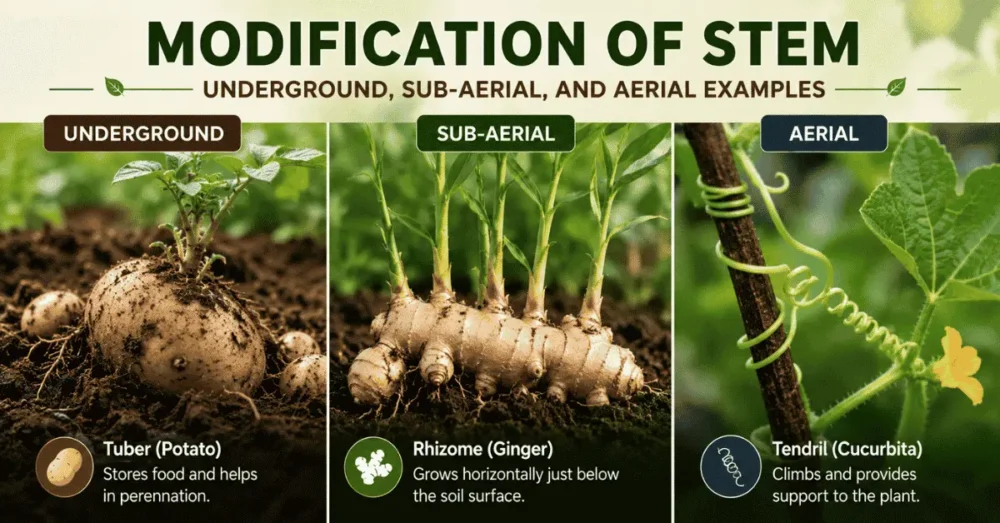
- Underground modifications: Stems that grow below the soil for food storage and perennation (e.g., ginger, potatoes).
- Sub-aerial modifications: Stems that grow parallel to the ground to help the plant spread and reproduce (e.g., strawberries, mint).
- Aerial modifications: Stems that grow above ground but transform into tendrils, thorns, or fleshy structures for climbing, defense, or water retention (e.g., grapevines, cacti).
In this post, we will explore the fascinating world of stem modifications, breaking down exactly how and why plants engineer these incredible survival structures.
Underground Modifications of Stem
In many plant species, underground stems are specially modified for two primary purposes: food storage and perennation. While these stems remain safely hidden beneath the soil, they reliably produce fresh aerial shoots annually.
What is Perennation? > Perennation is a plant’s remarkable ability to survive from one growing season to the next. These underground modifications act as a biological survival mechanism, protecting the plant during adverse environmental conditions like severe drought or freezing winters.
How to Tell an Underground Stem from a Root
Because they grow beneath the soil surface, underground stem modifications are frequently mistaken for roots. However, they can be easily distinguished by several key botanical characteristics:
- Nodes and Internodes: Unlike roots, a true plant stem will always feature distinct nodes and internodes.
- Specialized Structures: The nodes on an underground stem typically host scale leaves, growing buds, and adventitious roots.
- Internal Anatomy: The internal cellular structure of an underground stem mirrors that of an above-ground (aerial) stem, rather than a root system.
Common Types of Underground Stem Modifications
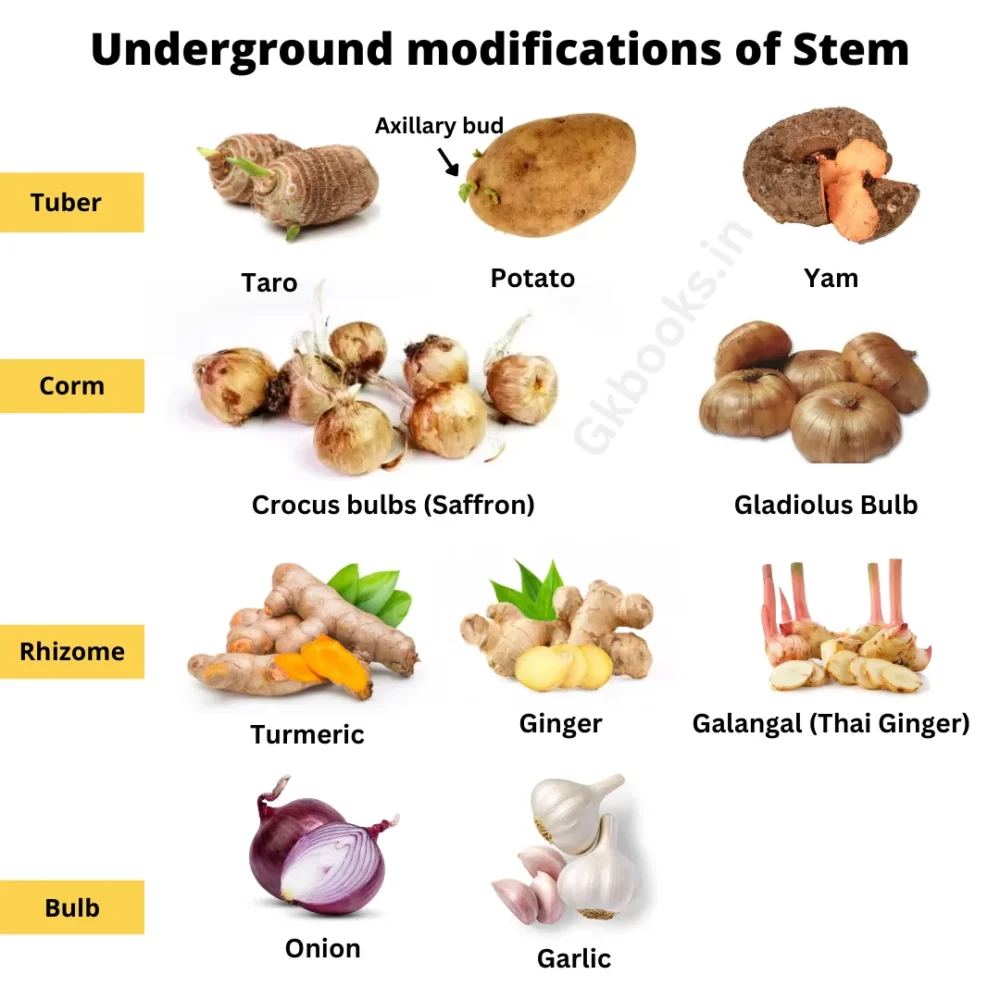
- Tuber
- Rhizome
- Corm
- Bulb
Let’s explore some more detailed facts about each type of underground stem modification.
1. Tuber
What is a Stem Tuber?
A tuber is the swollen, fleshy terminal end of an underground stem branch. It is specifically modified to act as a nutrient reservoir (storing carbohydrates like starch) and to facilitate vegetative propagation.
Key Botanical Characteristics for Exams
- Origin: It develops from the tips of specialized underground stem branches (stolons).
- Nutrient Accumulation: The tip swells significantly as it actively stores synthesized food from the leaves.
- Nodes and Internodes (“Eyes”): The surface of a tuber is covered in small depressions commonly referred to as “eyes.” From a botanical perspective, these eyes represent the nodes of the stem, and each contains one or more axillary buds.
- Vegetative Reproduction: Under favorable environmental conditions, these axillary buds sprout to form new aerial shoots and root systems, effectively growing into an entirely new, cloned plant.
Examples & Critical Exam Note
- True Stem Tubers: Potato (Solanum tuberosum) and Yam (Dioscorea).
- Exam Trap Alert: Be careful with Taro (Colocasia). While it is often loosely grouped with tubers in general conversation, botanically, Taro is an underground modification known as a corm (a vertically swollen stem). Additionally, examiners frequently test the difference between a potato (a stem tuber) and a sweet potato (which is a root tuber).
2. Rhizome
What is a Rhizome?
- A rhizome is a fleshy, non-green underground stem that grows horizontally beneath the soil surface.
- It is modified to store reserve food materials and serves as a vital organ for perennation and vegetative propagation.
Key Botanical Characteristics
- Growth Pattern: It exhibits diageotropic growth, meaning it grows horizontally or obliquely under the soil surface.
- Nodes and Internodes: The fleshy structure is clearly differentiated into distinct nodes and internodes, which is the definitive proof that it is a modified stem and not a root.
- Scale Leaves and Buds: The nodes bear thin, protective sessile scale leaves (leaves lacking a stalk). Safely tucked within the axils of these scale leaves are axillary buds, along with terminal buds at the growing apex.
- Root Formation: The lower surface of the nodes produces fibrous adventitious roots, which help anchor the plant and absorb moisture.
- Perennation: The buds remain safely dormant during harsh conditions. Once favorable (ideal) environmental conditions return, these buds break dormancy to produce new, green aerial shoots.
Examples & Critical Exam Note
- Classic Examples: Ginger (Zingiber officinale), Turmeric (Curcuma longa), Galangal (Thai Ginger), and Fingerroot.
- Exam Trap Alert: Competitive exams (like NEET) frequently feature a classic assertion-reason question: “Why is Ginger classified as a stem and not a root?”
- Incorrect student assumption: Because it stores food. (Roots like carrots store food too).
- Correct exam answer: Because it possesses distinct nodes and internodes and bears scaly leaves and buds.
- Another Key Distinction: Examiners love to test the directional growth of stems. Remember that a Rhizome grows horizontally, whereas a Corm (like Gladiolus) grows vertically.
3. Corm
What is a Corm?
- A corm is a short, solid, and fleshy underground stem that grows vertically beneath the soil surface.
- Like other underground modifications, it acts as a perennating organ to survive unfavorable seasons and stores a massive amount of reserve food material.
Key Botanical Characteristics for Exams
- Growth Pattern: Unlike the horizontally growing rhizome, a corm exhibits orthotropic growth, meaning it grows strictly in a vertical direction.
- Shape and Structure: It is heavily thickened and typically spherical, often featuring a flattened top and bottom.
- Nodes and Internodes: The corm consists of highly compressed or reduced internodes. The nodes appear as distinct circular rings around the structure and are protected by thin, dry, and membranous scale leaves.
- Root System: A robust network of adventitious roots develops directly from the flat base of the corm to absorb water and nutrients.
- Bud Development: It bears a large terminal bud at the apex that grows into the aerial shoot, along with several axillary buds that can develop into daughter corms (cormels) for vegetative propagation.
Examples & Critical Exam Note
- Classic Examples: Amorphophallus (Elephant foot yam), Gladiolus, Colocasia (Taro), and Crocus (Saffron).
- Exam Trap Alert 1 — The “Bulb” Misnomer: The saffron plant (Crocus sativus) is commonly sold and referred to as a “Crocus bulb.” Examiners love to exploit this. Botanically, it is a true corm. A true bulb (like an onion) is made almost entirely of fleshy scale leaves, whereas a corm is a solid, swollen piece of stem tissue.
- Exam Trap Alert 2 — Directional Growth: If a multiple-choice question asks you to differentiate between a rhizome (like ginger) and a corm (like Amorphophallus), the defining answer is the axis of growth. Rhizomes grow horizontally (diageotropic), while corms grow vertically (orthotropic).
4. Bulb
What is a Bulb?
- A bulb is a specialized underground shoot where the stem is highly reduced to a flat, disc-like structure, and the primary organs for food storage are the closely packed, overlapping leaves.
- The entire structure—the basal disc combined with the protective and fleshy leaves—is collectively referred to as the bulb.
Key Botanical Characteristics
- The Disc Stem: The actual stem is not swollen. Instead, it is exceptionally short, convex, or flat, appearing as a highly reduced basal disc.
- Fleshy Scale Leaves: The upper surface of the disc bears modified leaves. The outer leaves are typically dry and membranous (acting as a protective tunic), while the inner leaves are thick, fleshy, and packed with stored nutrients and water.
- Bud Development: A prominent terminal bud is located at the center of the fleshy leaves, which eventually shoots upward to form the aerial plant. Axillary buds can also form between the fleshy leaves.
- Root System: A dense cluster of fibrous adventitious roots arises from the lower (ventral) surface of the reduced disc stem.
Examples & Critical Exam Note
- Classic Examples: Onion (Allium cepa), Garlic (Allium sativum), Tulips, and Lilies.
- Exam Trap Alert 1 — The Edible Part: A high-frequency objective question asks, “What is the edible part of an onion?” Because the topic is “stem modifications,” students often mistakenly answer “the stem.” The correct exam answer is the fleshy scale leaves. The stem is simply the tough, tiny disc at the base that is usually cut off and discarded before cooking.
- Exam Trap Alert 2 — The Storage Organ: You must remember that unlike tubers, corms, and rhizomes (where the actual stem tissue swells with nutrients), the stem of a bulb does not store food. The food is stored exclusively in the modified leaf bases.
- Exam Trap Alert 3 — Garlic Cloves: While an onion is a single fleshy bulb, garlic is composed of multiple individual “cloves.” Examiners love to ask what these cloves are botanically. Each garlic clove is a fleshy axillary bud.
Subaerial Modification of Stem
What is the Subaerial Modification of Stems?
In botany, subaerial modifications of stems occur when a plant’s stem grows partially above ground (aerial) and partially beneath the soil. Instead of growing vertically, these specialized stems creep along the surface to help the plant spread across an area. Because of this creeping growth habit, plants with these stems are commonly known as creepers.
Key Characteristics of Subaerial Stems
If you are trying to identify a subaerial stem modification, look for these defining features:
- Growth Pattern: They feature short aerial branches that shoot upward, while the main stem remains horizontal near the soil.
- Root Development: Adventitious roots develop directly at the nodes (the joints of the stem) wherever they make contact with the soil.
- Vegetative Propagation: Their primary evolutionary purpose is reproduction. If a node is separated from the parent plant, it can easily grow into a fully developed, independent plant.
The 4 Types of Subaerial Stem Modifications
Depending on their specific growth structure and how they spread, subaerial stems are classified into four distinct categories. Here are the four types along with common examples:
- Offset: Short, thick horizontal branches found primarily in aquatic plants. (Example: Water hyacinth, Pistia)
- Runner: Stems that creep over the surface of the soil, breaking off to form new plants. (Example: Lawn grass, Oxalis)
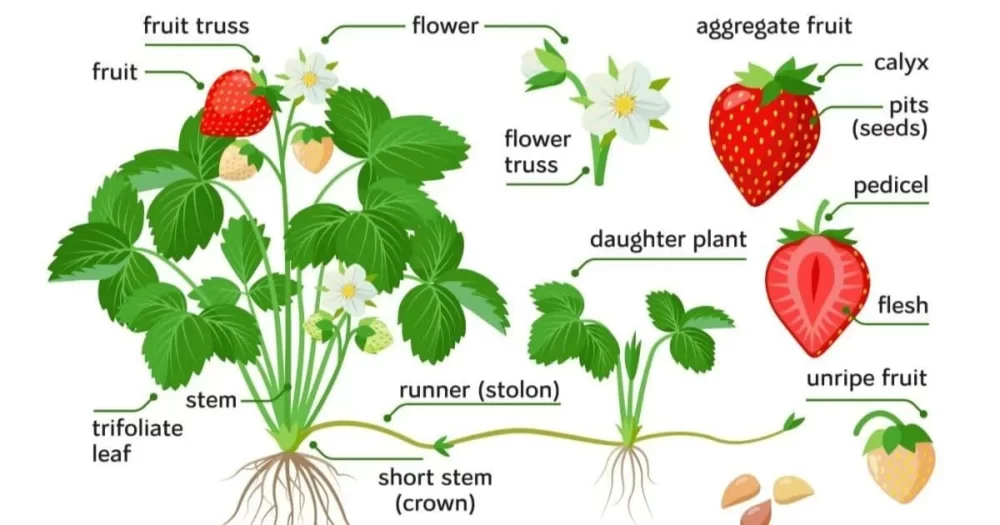
- Stolon: Stems that initially grow upward but then bend down to touch the ground, striking roots. (Example: Strawberry, Jasmine)
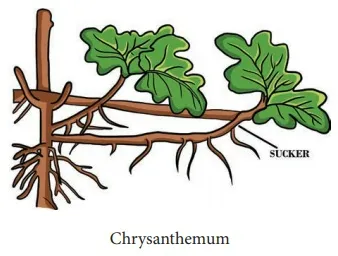
- Sucker: Underground stems that grow horizontally before emerging obliquely as leafy shoots. (Example: Mint, Chrysanthemum)
Now, let’s dive deeper into how each of these four types works.
1. Runners (Creeping Stems)
A runner is a type of creeping subaerial stem that grows horizontally—or prostrately—flat along the surface of the soil. Runners are highly efficient at vegetative propagation, allowing the plant to spread rapidly over a wide area to form a dense patch.
Key Characteristics of a Runner:
- Prostrate Growth: Unlike standard stems that grow upward, runners creep directly on top of the soil.
- Long Internodes: The stem features long internodes (the smooth sections of stem between the joints, or nodes). This elongated structure helps the plant cover ground quickly.
- Rooting at the Nodes: As the runner spreads, it drops adventitious roots into the soil at every node, simultaneously sending new leafy shoots upward to form independent plants.
Common Examples of Runners:
- Cynodon (Commonly known as Doob grass or Bermuda grass)
- Oxalis (Wood sorrel)
- Hydrocotyle (Indian pennywort)
Stolon
What is a Stolon?
- A stolon is a slender lateral branch of a stem that grows horizontally along or just beneath the soil surface.
- It is primarily modified for rapid vegetative propagation.
- While it shares traits with underground stems, standard botanical syllabuses technically classify it as a sub-aerial stem modification.
Key Botanical Characteristics
- Origin and Growth: A stolon typically arises from the basal, underground portion of the main stem. It grows aerially or horizontally for a short distance before arching downwards to touch the ground.
- Nodes and Rooting: Like all stems, stolons possess nodes and internodes. When a node comes into contact with moist soil, the lower portion produces fibrous adventitious roots, while the upper portion gives rise to new aerial branches.
- Plant Multiplication: Once the new shoot is established, the connecting internode (the stolon) eventually dies or breaks, leaving behind an entirely independent, cloned plant.
Examples & Critical Exam Note
- Classic Exam Examples: Jasmine (Jasminum) and Mint (Mentha).
- Exam Trap Alert 1 — The Colocasia Error: Your notes listed Colocasia (Taro) as a stolon. Do not write this in an exam! As we covered earlier, Colocasia is a classic example of a vertically growing corm. Examiners frequently put Colocasia in multiple-choice options for stolons to trick students.
- Exam Trap Alert 2 — Stolon vs. Runner: Many general textbooks group Strawberries as stolons. However, if you are preparing for exams based on strict national syllabuses (like the NCERT for NEET), you must classify Strawberry and grasses as “Runners” (which creep flat on the surface), and Mint and Jasmine as “Stolons” (which arise from the base, grow aerially for some time, and then arch down to touch the ground).
- Sub-aerial vs. Underground: If an exam asks for strict “underground” modifications for perennation, stick to Rhizome, Tuber, Corm, and Bulb. Stolons act primarily for reproduction rather than long-term food storage.
Sucker
What is a Plant Sucker? Definition and Examples
In botany, a sucker is a specialized lateral branch used for natural vegetative propagation. It originates from the basal, underground portion of a plant’s main stem.
Key Characteristics of a Sucker
- Underground Origin: Suckers develop directly from the nodes of an underground stem.
- Growth Pattern: Initially, both the main stem and the newly formed sucker grow horizontally beneath the soil surface.
- Upward Emergence: After growing horizontally for a short distance, the sucker grows obliquely (upward at an angle) to emerge above the soil as a new, independent leafy shoot.
- Root Development: To support the new shoot, adventitious roots form from the lower portion of the underground nodes.
Common Examples of Plants with Suckers
Many popular garden and agricultural plants reproduce via suckers. Common examples include:
- Banana
- Mint
- Chrysanthemum
6. Offset
What is an Offset?
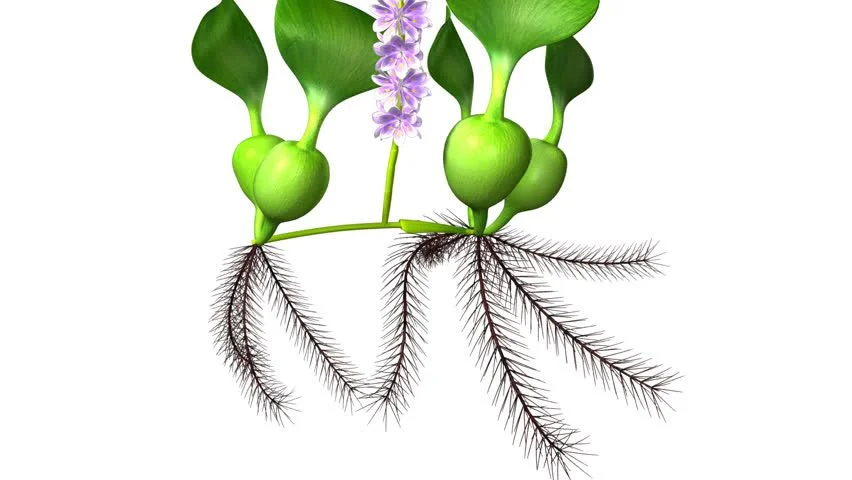
- An offset is a short, thick, and fleshy lateral branch of a stem found primarily in aquatic plants.
- Often described as an “aquatic runner,” it is a sub-aerial modification specifically designed for rapid vegetative propagation in water bodies.
Key Botanical Characteristics for Exams
- The “One-Internode” Rule: Unlike terrestrial runners that have long internodes, an offset is characteristically short and thick, typically consisting of just one internode.
- Rosette and Tuft Formation: The branch originates from the axil of a leaf. At its terminal node, it produces a distinct rosette of leaves above the water surface and a dense tuft of adventitious roots below the water.
- Rapid Multiplication: As the plant grows, multiple offsets are produced in all directions. If the connecting internode snaps or decays, each individual node is fully capable of surviving and growing as an independent, free-floating plant.
Examples & Critical Exam Note
- Classic Examples: Eichhornia (Water Hyacinth) and Pistia (Water Lettuce).
- Exam Trap Alert 1 — The “Terror of Bengal” (High-Yield): In competitive exams like NEET and UPSC, Eichhornia is rarely just tested in botany; it is heavily tested in ecology. Because it propagates so rapidly via offsets, Water Hyacinth covers entire water bodies in a matter of days. It drains dissolved oxygen from the water, leading to the mass death of fishes. For this reason, examiners frequently test it under its notorious moniker: the “Terror of Bengal.”
- Exam Trap Alert 2 — Offset vs. Runner: Objective questions often ask students to differentiate between the two. The golden rule for exams: Runners have long internodes and belong to terrestrial plants (like grasses), whereas Offsets have short, thick internodes and belong to aquatic plants.
Aerial Modification of Stem
What are Aerial Stem Modifications?
- In a typical plant, the aerial (above-ground) stem is primarily responsible for holding leaves, flowers, and fruits, while conducting water and nutrients.
- However, in certain plants facing unique environmental challenges, the vegetative buds (either axillary or terminal buds) undergo specialized structural changes.
- These above-ground adaptations are called aerial stem modifications.
Why Do Aerial Stems Modify? (Key Functions)
Instead of just providing basic support, these stems transform to perform highly specialized survival functions:
- Climbing (Mechanical Support): Modified to help plants with weak stems scale physical supports to reach sunlight.
- Protection (Defense Mechanisms): Modified into sharp, woody structures to deter grazing herbivores.
- Photosynthesis & Food Storage: Modified to become green, fleshy, and photosynthetic, allowing the plant to survive in severe, arid (desert) conditions.
- Vegetative Propagation: Modified into fleshy structures that detach from the parent to grow into new plants.
Critical Exam Note — The “Stem vs. Leaf” Trap
- Examiners love to ask “matching” or “odd-one-out” questions where they mix aerial stem modifications with leaf modifications.
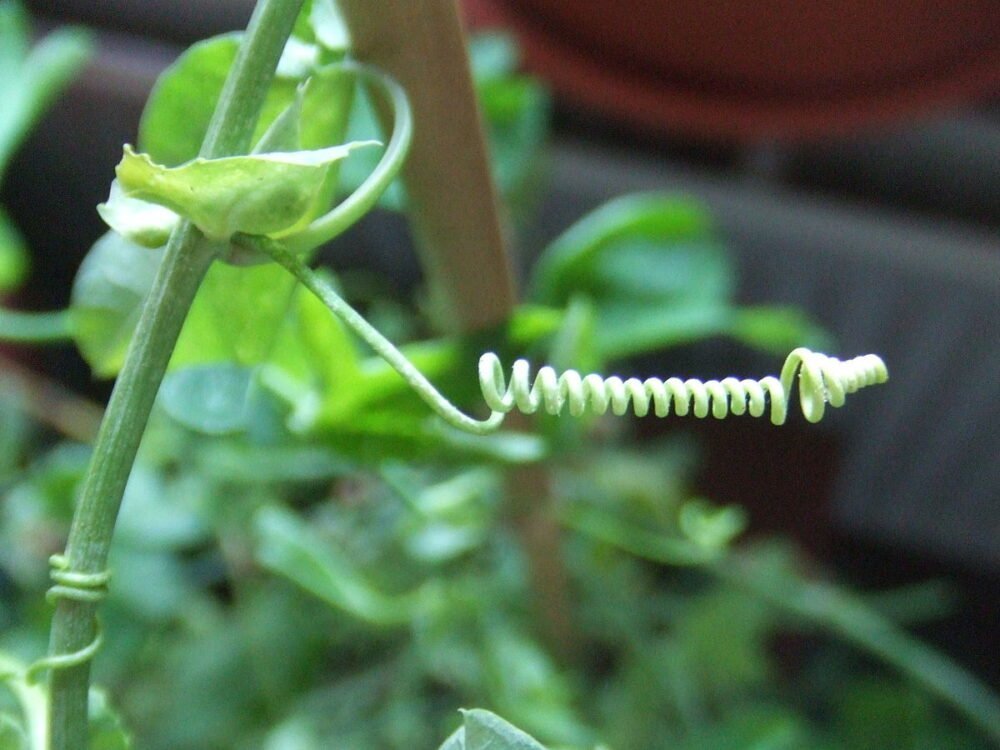
- For example: The tendrils in a pumpkin are stem modifications (arising from axillary buds), but the tendrils in a pea plant are leaf modifications. Similarly, the thorns on Bougainvillea are stem modifications, but the spines on a Cactus are leaf modifications. Knowing the difference between what modified—the stem or the leaf—is the key to securing full marks.
1. Stem Tendrils
What is a Stem Tendril?
A stem tendril is a thin, wiry, leafless, and spirally coiled aerial stem modification. It develops in plants with weak stems to provide mechanical support, allowing the plant to grip and climb over nearby structures or host plants.
Key Botanical Characteristics
- Origin: Tendrils develop from the modification of vegetative buds—most commonly axillary buds, but sometimes terminal buds.
- Thigmotropism (Touch Sensitivity): Tendrils are highly sensitive to physical contact. When they brush against a solid support, they rapidly coil around it. This directional growth response to touch is called thigmotropism, a frequently tested ecological concept.
- Absence of Leaves: Because they are modified stems, they may occasionally bear tiny scale leaves, but they are generally leafless to remain lightweight and wiry.
Examples & Critical Exam Note
- Classic Exam Examples (NCERT Aligned): Gourds (Cucumber, Pumpkin, Watermelon) and Grapevines (Vitis).
- Exam Trap Alert 1 — The Groundnut Error: Your original notes listed Groundnut (Arachis hypogaea) as having tendrils. This is incorrect and a common trap! Groundnuts do not climb; they are known for geocarpy (pushing their fertilized ovaries underground to develop into peanuts). Never select Groundnut for a tendril question.
- Exam Trap Alert 2 — Axillary vs. Terminal Origin: Top-tier exams will test exactly which bud modified into the tendril.
- In Gourds (Pumpkin, Watermelon) and Passiflora (Passion flower), the tendril develops from an axillary bud.
- In Grapevines (Vitis), the tendril develops from an apical or terminal bud.
- Exam Trap Alert 3 — Stem Tendril vs. Leaf Tendril: This is the most repeated question in botany morphology. You must memorize the difference:
- Stem Tendril: Pumpkin, Cucumber, Watermelon, Grapevine.
- Leaf Tendril: Pea plant (Pisum sativum) and Sweet Pea (Lathyrus odoratus).
2. Stem Thorn
What is a Thorn?
A thorn is a hard, stiff, sharply pointed, and usually straight aerial structure. It is a highly specialized modification of the stem designed primarily to protect the plant from browsing herbivores (grazing animals) and, in some cases, to reduce water loss (transpiration).
Key Botanical Characteristics
- Origin: Thorns primarily develop from the modification of axillary buds, though they can occasionally arise from terminal buds.
- Vascular Supply (Crucial Point): Because a thorn is a modified stem, it possesses a deep-seated vascular supply (xylem and phloem) connected directly to the plant’s main vascular system. This makes them difficult to break off.
- Stem-Like Features: The ultimate proof that a thorn is a modified stem is that it often bears nodes, internodes, and even tiny leaves or flowers on its surface (as seen in Duranta and Pomegranate).
Examples & Critical Exam Note
- Classic NCERT/Exam Examples: Citrus (Lemon, Orange), Bougainvillea, Bael (Aegle marmelos), Carissa, Duranta, and Pomegranate (Punica granatum).
- Exam Trap Alert 1 — Thorn vs. Spine vs. Prickle (High-Yield): This is arguably the most common morphology trap in competitive exams like NEET and UPSC. You must know the exact botanical difference:
- Thorns (Modified Stems): Have vascular tissue, arise from axillary buds. Example: Bougainvillea, Citrus.
- Spines (Modified Leaves/Stipules): Have vascular tissue, but are modified leaf parts designed to reduce transpiration in deserts. Example: Cactus (Opuntia).
- Prickles (Epidermal Outgrowths): Are merely superficial outgrowths of the epidermis or cortex. They have no vascular supply and can be easily snapped off with your thumb. Example: Rose (Rosa). Never call the sharp structures on a rose “thorns” in an exam!
- Exam Trap Alert 2 — The Bougainvillea vs. Opuntia Pairing: Examiners frequently ask: “The thorns of Bougainvillea and the spines of Opuntia are analogous or homologous organs?” Because one is a stem (Bougainvillea) and one is a leaf (Opuntia), they have different origins but perform the same function (defense). Therefore, they are analogous organs.
3. Bulbils
What is a Bulbil?
A bulbil is a specialized, fleshy, and swollen vegetative or floral bud that functions as a powerful organ for vegetative propagation. Unlike typical buds that remain attached to form branches or flowers, bulbils are designed to detach from the parent plant, fall to the soil, and independently grow into entirely new plants.
Key Botanical Characteristics for Exams
- Nutrient Storage: The bud swells significantly because it actively accumulates reserve food materials. This stored energy is crucial for the bud’s survival and sprouting once it detaches.
- Detachment and Germination: Once fully mature, the bulbil separates (abscises) from the parent plant. It rests on the ground and, upon the approach of favorable environmental conditions (ideal moisture and temperature), gives rise to new adventitious roots and an aerial shoot.
- Clonal Reproduction: Because they are products of asexual vegetative reproduction, the plants that grow from bulbils are exact genetic clones of the parent plant.
Examples & Critical Exam Note
- Classic Exam Examples: Yam (Dioscorea), Oxalis, Agave, and Lily (Lilium).
- Exam Trap Alert 1 — Vegetative vs. Floral Origin (High-Yield): This is where top-ranking students secure their marks. Examiners will ask you to identify the specific type of bud that modified into the bulbil:
- In Yam (Dioscorea), the bulbil is a modified vegetative axillary bud.
- In Agave and some species of Onion/Garlic (Allium), the bulbil is a modified floral bud (it develops on the inflorescence or flower stalk instead of a flower).
- Exam Trap Alert 2 — Bulbil vs. Bulb: Do not let the similar names trick you in a high-pressure exam environment! A Bulb (like an onion) is an underground stem modification made of fleshy leaves. A Bulbil is an aerial bud that detaches to reproduce.
Phylloclade
What is a Phylloclade?
- A phylloclade is a modified, fleshy, and photosynthetic stem or branch with unlimited growth, characterized by having multiple nodes and internodes.
- The term originates from Greek, where phyllo means “leaf” and klados means “branch or shoot.” Because the stem takes on the appearance and function of a leaf, the true leaves of the plant are modified into spines or small scales.
Key Characteristics
When identifying a phylloclade in an exam question, look for these defining traits:
- Origin: It is a modified aerial stem or branch, not a true leaf.
- Structure: It possesses multiple distinct nodes and internodes.
- Appearance: Typically thick, fleshy, and green. It can be flattened (like a paddle) or cylindrical.
- Leaf Modification: True leaves fall off early or transform into spines/scales.
Functions & Xerophytic Adaptations
Phylloclades are a classic xerophytic adaptation—a feature that helps plants survive in dry, desert environments.
- Photosynthesis: Because the true leaves are modified, the green, fleshy stem takes over the job of producing food.
- Water Storage: The thick, fleshy tissue stores water to survive prolonged droughts.
- Transpiration Control: Exam Trap Warning! Your notes mentioned that the spine “helps in transpiration.” To be biologically accurate for your exams, remember that spines prevent or drastically reduce the rate of transpiration. By reducing the surface area of the leaves into narrow spines, the plant prevents massive water loss.
High-Yield Examples
Examiners love to test these specific examples. Memorize their shapes:
- Opuntia (Prickly Pear): Features a flattened phylloclade.
- Euphorbia: Features a cylindrical phylloclade.
- Coccoloba: Features a flattened/ribbed phylloclade.
- Casuarina: Another example of a cylindrical, photosynthetic stem.
Phylloclade vs. Cladode (Frequent Exam Question)
The most common trap in competitive exams is confusing a phylloclade with a cladode. Both are modified photosynthetic stems, but they differ in growth limit.
| Feature | Phylloclade | Cladode |
| Growth | Unlimited growth | Limited growth |
| Structure | Multiple nodes and internodes | Usually only 1 or 2 internodes |
| True Leaves | Modified into spines or scales | Modified into scales |
| Examples | Opuntia, Euphorbia, Coccoloba | Asparagus, Ruscus |
Cladode
What is a Cladode?
A cladode (sometimes called a cladophyll) is a green, photosynthetic stem or branch modification that looks and functions like a leaf, but is characterized by having limited growth.
Unlike a phylloclade, a cladode typically consists of only one or two internodes. Because the stem takes over the function of photosynthesis, the true leaves are highly reduced to microscopic scales or small spines.
Key Characteristics
When identifying a cladode in an exam question, look for these defining traits:
- Origin: It is a modified branch that usually arises from the axil of a highly reduced scale leaf.
- Growth Limit: It stops growing after developing one or two internodes (limited growth).
- Appearance: Can be cylindrical (needle-like) or flattened and leaf-like.
- Function: Performs photosynthesis and helps reduce transpiration in arid conditions.
High-Yield Examples (Exam Focus)
Examiners frequently test your ability to match the plant with its specific cladode structure. Memorize these two classic examples:
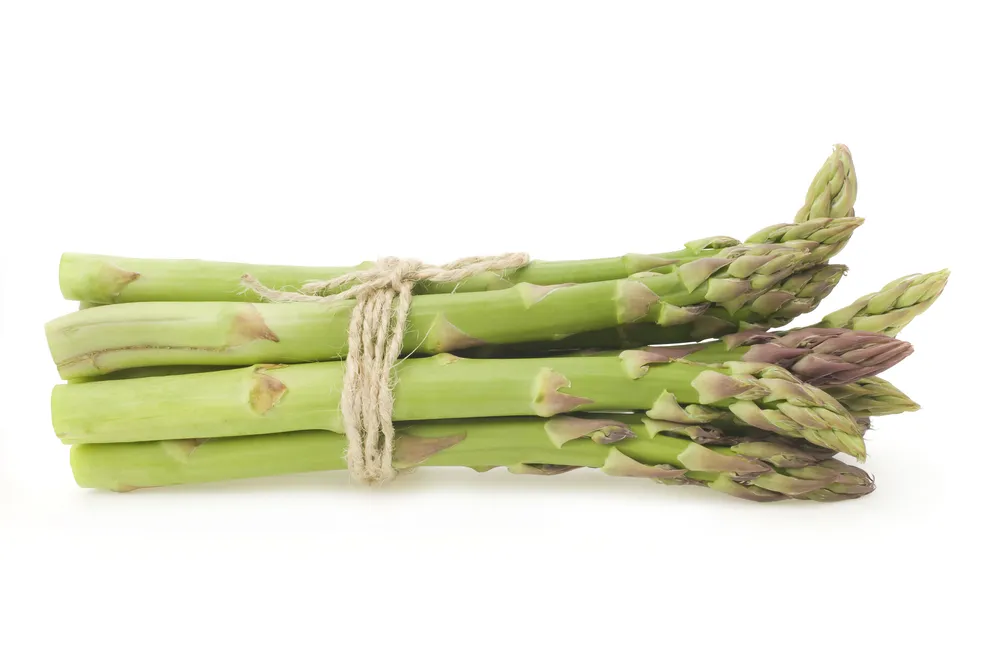
- Asparagus: Features cylindrical cladodes that are exactly one internode long. They appear in clusters (fascicles) and look like tiny green needles.
- Ruscus: Features flattened, leaf-like cladodes that are usually two internodes long.
The Ruscus Exam Trap
Competitive exams (like NEET) often use Ruscus to test if you truly understand plant morphology.
If you look closely at a Ruscus plant, you will see flowers and berries growing right out of the middle of what looks like a “leaf.”
Key insight: True leaves never bear flowers or fruits directly on their surface. The fact that floral buds and fruits develop on the surface of this structure is the ultimate proof that the “leaf” of a Ruscus is actually a modified stem (a cladode).
Quick Comparison: Cladode vs. Phylloclade
To ensure you never lose marks on this topic, remember the single most important distinction:
| Feature | Cladode | Phylloclade |
| Growth Limit | Limited (Stops after 1-2 internodes) | Unlimited (Keeps growing) |
| Internodes | 1 or 2 | Many |
| Shape | Mostly cylindrical, sometimes flat | Mostly flat, sometimes cylindrical |
| Classic Examples | Asparagus, Ruscus | Opuntia, Euphorbia |
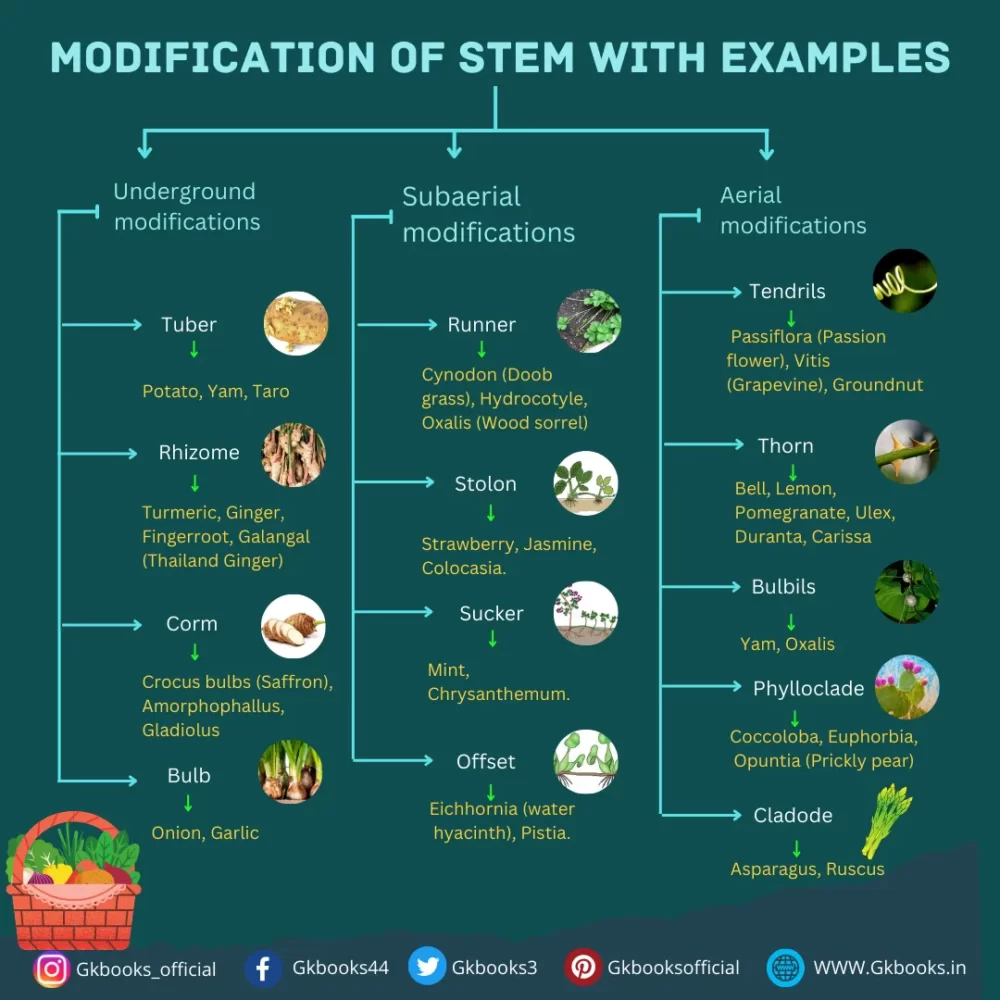
Modification of Stem with examples (Chart)
Frequently Asked Questions (FAQ)
Answer: The thorn of citrus is a modified branch or stem, rather than a modified leaf. Citrus trees, which include oranges, lemons, limes, and grapefruits, are characterized by their sharp thorns or spines that grow on their branches and stems.
Answer: Leaves are modified into tendrils in many climbing plants, which use these tendrils to attach themselves to structures or other plants for support as they grow. Some examples of plants with tendrils include Peas, Grape Vine, Cucumbers, and Sweet Peas.
Answer: An example of an edible underground stem is the potato (Solanum tuberosum). Potatoes are a type of tuber, a specialized type of underground stem that stores nutrients to support plant growth.
Answer: A new banana plant developed from the underground stem of a banana plant is called a rhizome.
Answer: Mint plants (genus Mentha) have a type of stem modification called “Sucker.”
Explore More General Science Topics
Modification of Stem: Underground, Sub-aerial, and Aerial Examples
When you think of a plant’s stem, you likely picture a green or woody stalk…

Heart Chambers: Anatomy, Functions, Diagram & Exam-Focused Notes
Understanding the four chambers of the human heart is fundamental to mastering human physiology, especially…

Vitamin Deficiency Diseases – Causes, Symptoms, Sources & Exam-Focused Notes
Vitamins are essential micronutrients required by the body in small quantities, yet their role in…
Thymus Gland: The Powerhouse of Immunity
The thymus gland is a small but important organ in our body. It plays a…

Importance of Insulin Hormone: Complete Guide
Hormones are chemical messengers that coordinate and regulate various functions of the human body—such as…

Stem Cells – Definition, Types, Functions, and Applications
When it comes to competitive exams like SSC, RRB NTPC, UPSC, and State-level exams, certain…