
Physics Notes

Physics notes for competitive exams cover a wide range of topics, such as kinematics, dynamics, energy, waves, optics, and modern physics. These notes typically focus on the most important and frequently tested concepts, such as equations, formulas, and problem-solving techniques.

Quick Navigation Links (👇)

BIOLOGY
CHEMISTRY
GENERAL SCIENCE

Back to Home Page (👇)

Gkbooks (Visit All Categories)

Factors Affecting Gravitational Force - Exam-Focused Notes

Factors Affecting Gravitational Force: Exam-Focused Notes

The gravitational force between two objects depends mainly on two factors: Let’s explore this topic step by step. 👇 Introduction Gravity is one of the most important forces in the universe. It keeps planets in orbit, holds the atmosphere around Earth, and allows us to walk on the ground without floating away. In simple words, […]

Factors Affecting Gravitational Force: Exam-Focused Notes Read More »

What is Denser Medium in Optics A Complete Guide

What is Denser Medium in Optics? A Complete Guide

Optics, the branch of physics dealing with light, often fascinates students and challenges aspirants preparing for competitive exams. A key concept within optics is the medium—the environment through which light travels. Light doesn’t always behave the same way; its speed, direction, and behavior depend on the medium it passes through. When you look into a

What is Denser Medium in Optics? A Complete Guide Read More »

Examples of Total Internal Reflection Explained with Real-Life Applications

Examples of Total Internal Reflection: Explained with Real-Life Applications

If you’ve ever seen a mirage on a hot road or wondered how optical fibers carry internet signals, you’ve already brushed against the magic of Total Internal Reflection (TIR). Let’s break it down step-by-step so you can understand it easily and remember it for your exams. What is Total Internal Reflection? When light passes from

Examples of Total Internal Reflection: Explained with Real-Life Applications Read More »

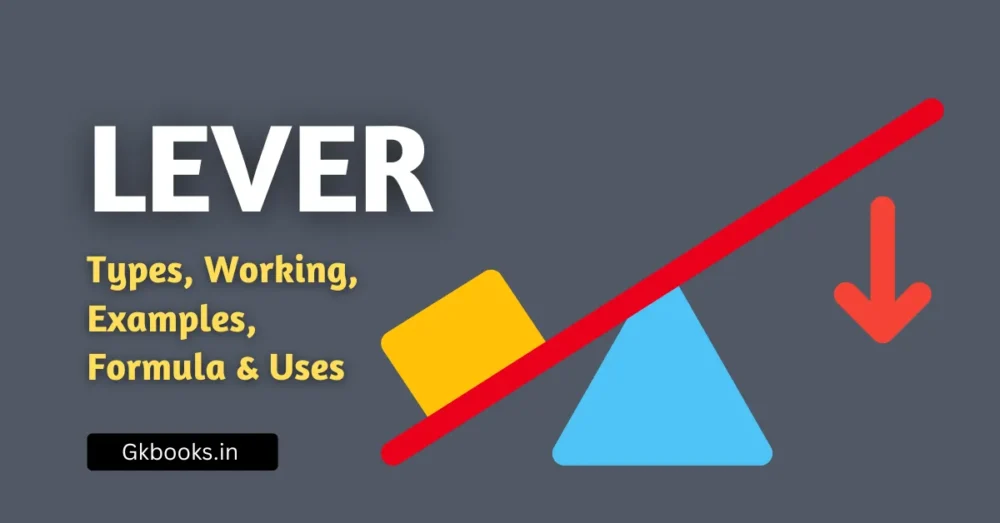
What is a Lever – Types, Working, Examples, Formula & Uses

What is a Lever? – Types, Working, Examples, Formula & Uses

A lever is a simple machine that helps us do work more easily by multiplying force. It plays a crucial role in everyday tools like scissors, pliers, seesaws, and even our body movements. Understanding levers is essential for students from Class 6–12, as it is frequently covered in NCERT Science, Physics basics, and competitive exams

What is a Lever? – Types, Working, Examples, Formula & Uses Read More »

Introduction to Ferromagnetism: A Simple Explanation

Have you ever played with a magnet and seen how it sticks to some metals but not others? This amazing property is due to ferromagnetism! It is the reason why materials like iron, cobalt, and nickel become strong magnets. Ferromagnetism is an important topic in general science Physics and is often asked about in competitive

Introduction to Ferromagnetism: A Simple Explanation Read More »

Speed of Light: In-Depth Notes for Competitive Exams

The speed of light is one of the most fundamental concepts in physics. From the Sun’s rays that brighten our world to the glow of a firefly at night, light is everywhere. Understanding it is crucial for competitive exams like SSC, RRB NTPC, UPSC, and state-level exams. This guide simplifies the concept of the speed

Speed of Light: In-Depth Notes for Competitive Exams Read More »

Magnifying Power of Optical Instruments Formula With Quick Quiz

Have you ever wondered how a microscope allows you to see tiny bacteria or how a telescope helps you observe distant stars? These instruments use lenses to magnify objects, making them appear larger than they actually are. The ability of an optical instrument to enlarge an image is called its magnifying power. In this post,

Magnifying Power of Optical Instruments Formula With Quick Quiz Read More »

Understanding the Image Formed by a Concave Mirror: Key Concepts, Types, and Practical Applications

Concave mirrors, also known as converging mirrors, are curved mirrors that curve inward, resembling a portion of a sphere. These mirrors are used in various applications, from simple household items like makeup mirrors to complex scientific instruments such as telescopes and satellite dishes. Understanding how a concave mirror forms images is crucial for students, enthusiasts,

Understanding the Image Formed by a Concave Mirror: Key Concepts, Types, and Practical Applications Read More »

Potential Difference (Voltage): Definition, Formula, Unit & How to Measure It?

Electricity flows through wires because of a special kind of “push” called potential difference, also known as voltage. This push helps move tiny particles called electrons from one place to another inside an electrical conductor, like a wire. What is Potential Difference? Potential difference is the energy needed to move a charge (electron) from one

Potential Difference (Voltage): Definition, Formula, Unit & How to Measure It? Read More »

Electric Current: Properties, Formula, Types & Effects

Electric current is one of the greatest discoveries that has made our lives easier. People have always been curious about lightning and how it forms. Even in ancient times, the Greeks studied magnetism and tried to understand electricity. The journey of electricity and current has developed over time. It started with Benjamin Franklin’s kite experiment

Electric Current: Properties, Formula, Types & Effects Read More »

Ohm’s Law -Definition, Statement, Formula, Limitation

Ohm’s Law: Statement, Formula, and Real-Life Applications

Have you ever wondered how electricity flows through wires? Ohm’s Law is a simple rule that explains the relationship between voltage (V), current (I), and resistance (R) in an electric circuit. It helps us understand how electric devices like bulbs, fans, and mobile chargers work. According to Ohm’s Law, when we increase the voltage, the

Ohm’s Law: Statement, Formula, and Real-Life Applications Read More »

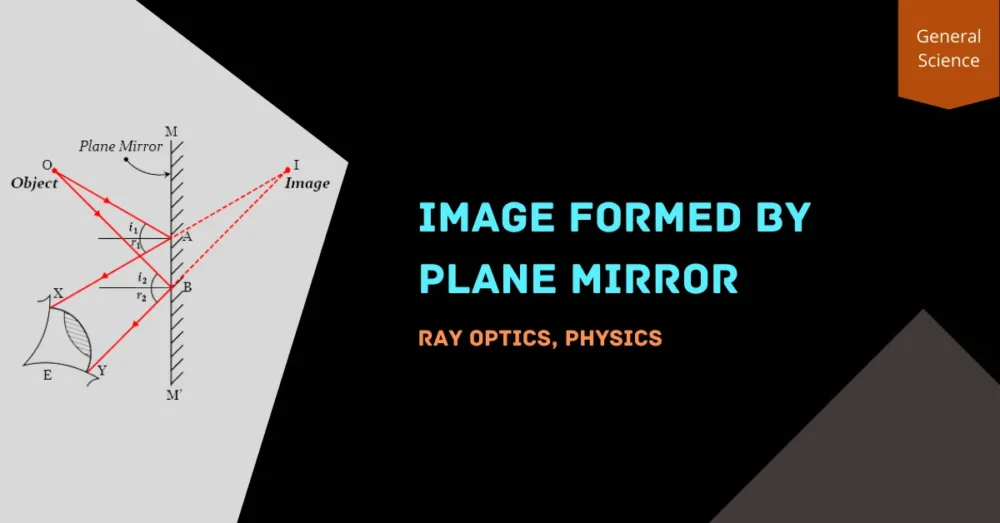
the text "Image formed by Plane Mirror" written on a black background with an image of ray diagram

How Images Are Formed by Plane Mirrors: A Complete Guide

Have you ever looked into a mirror and seen yourself exactly as you are? That’s because a plane mirror creates an image that looks just like the real object! In this guide, we will explore how images are formed by plane mirrors, their properties, and important concepts for SSC, Banking, RRB NTPC, UPSC, and other

How Images Are Formed by Plane Mirrors: A Complete Guide Read More »

List of Optical Instruments and Their Uses with PYQs

Have you ever wondered how a microscope helps us see tiny germs or how a telescope brings distant stars closer? These amazing devices are called optical instruments because they use light to help us see things more clearly. From eyeglasses to binoculars, these tools make our lives easier in many ways. In this guide, we

List of Optical Instruments and Their Uses with PYQs Read More »

Different Characteristics of Sound

Different Characteristics of Sound: An In-Depth Look at Its Core Properties

Sound is all around us! Whether it’s music, a ringing phone, or a person talking, sound waves help us hear different noises. But what makes sounds loud or soft, high or low, clear or unclear? These features are called the characteristics of sound. In this article, we will explore the different properties of sound, such

Different Characteristics of Sound: An In-Depth Look at Its Core Properties Read More »

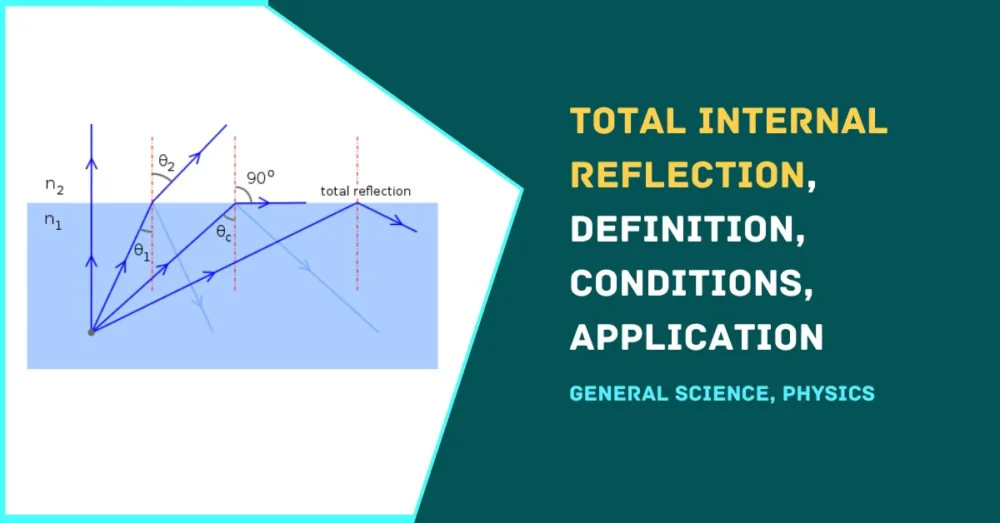
Total Internal Reflection, definition, conditions, application

Total Internal Reflection, Definition, Conditions, Application: Complete Notes

Total Internal Reflection (TIR) is a special light phenomenon where a ray of light bounces back completely instead of passing through a surface. This happens when light moves from a denser medium to a rarer medium at a certain angle. Understanding TIR is important for SSC, Banking, RRB NTPC, UPSC, and State exams, as it

Total Internal Reflection, Definition, Conditions, Application: Complete Notes Read More »

Types of Electrical Circuits: A Complete Guide with Examples

A circuit in Physics is a closed loop or path that allows electrons to flow, creating an electric current. The basic components of a circuit include a power source (like a battery), conducting wires, a switch, and a device like a light bulb. There are many types of circuits, such as: Each type of circuit

Types of Electrical Circuits: A Complete Guide with Examples Read More »

Variation in the Value of ‘g’ (Acceleration due to Gravity)

The value of acceleration due to gravity, represented by ‘g,’ is a fundamental concept in physics that plays a crucial role in various scientific applications. However, it is not a constant value across the Earth’s surface; it varies based on several factors such as altitude, latitude, and the Earth’s rotation. In this post, we will

Variation in the Value of ‘g’ (Acceleration due to Gravity) Read More »

Scroll to Top